

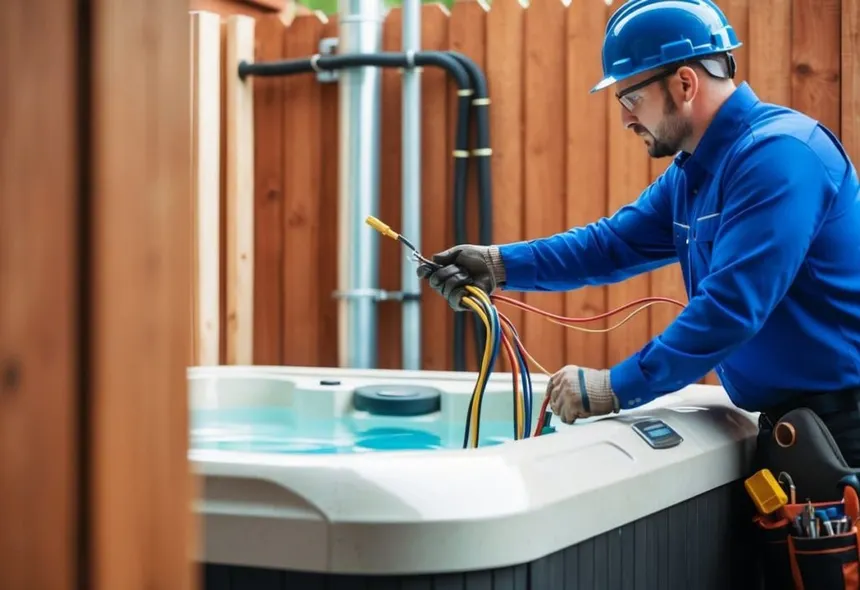
So, you finally did it. You decided to buy a hot tub, or maybe you bought one already. You have picked the perfect spot in your backyard, and you are excited to use it. But then the main question arises: Who's going to handle the electrical installation?
While setting up the hot tub may seem easy, the actual process is not and requires professional help.
At E-Z-A Electric Inc., we've handled hot tub electrical installations across Indianapolis for over 32 years. Here is everything you need to know before a single wire gets touched.
Most hot tubs can't simply be plugged into a standard household outlet. They run on a dedicated 240-volt circuit, drawing anywhere from 40 to 60 amps of power continuously. That's the same voltage range as a large home appliance, but in an outdoor, wet environment where people are sitting in water.
Because hot tubs combine water and electricity, proper electrical protection becomes a necessity. This makes GFCI (Ground-Fault Circuit Interrupter) protection essential. The CPSC (U.S. Consumer Product Safety Commission) recommends installing GFCIs for protection against electrocution hazards involving electrical circuits in and around pools, spas, and hot tubs, and that recommendation exists for a reason.
It requires a licensed electrician who understands both the National Electrical Code requirements and the Indianapolis local permit requirements.
Every hot tub installation in the United States requires compliance with NEC Article 680. This section deals with the National Electrical Code governing swimming pools, spas, and hot tubs.
Here are the five non-negotiable requirements a hot tub installation in Indianapolis needs to comply with:
A hot tub cannot share a circuit with any other appliance or outlet. It needs its own line running directly from the electrical panel, which is typically a 50- to 60-amp circuit, depending on the tub's specifications.
GFCIs continuously monitor the flow and shut off the moment they detect a fault. GFCI protection is recommended for all electrical equipment used with hot tubs, including heaters operating on 240-volt circuits.
The disconnect switch, specifically for the hot tub, is required to be installed at least 5 feet away from the hot tub, but should be within sight. This allows anyone present during an emergency to cut power to the tub quickly, without getting near the water.
Wiring must run through approved conduit, either PVC or rigid metal, which must be buried at the correct depth to protect it from moisture, sunlight, and physical damage. This keeps the electrical system safe for years to come.
A hot tub's metallic components should be properly bonded and grounded to ensure that, in case a fault occurs, the electrical current is safely directed to the ground rather than through the water.
The cost of hot tub electrical installation depends on multiple factors, including permits, inspection, trenching, the complexity of the wiring run, and the distance of the panel to the tub.
Based on the typical residential installations in the Indianapolis area, you can generally expect to pay:
| What's Included | Typical Cost |
|---|---|
| Basic wiring and GFCI breaker installation | $800 – $1,500 |
| Installation with panel upgrade | $1,500 – $3,000 |
| Full installation with long conduit run | $1,200 – $2,500 |
If you have purchased a house with a hot tub already installed, it is worth having it inspected for your safety. Here are the warning signs of a substandard installation:
In almost every case, the answer is yes.
Electrical work for hot tub installation in Indianapolis typically requires a permit, and the completed work then needs to pass a local inspection before the tub can be used.
This is not bureaucratic red tape, but a necessary step to make sure that your installation process is safe, code-compliant, properly documented, and covered by your homeowner's insurance in the event of an accident.
An unpermitted installation may create issues with insurance claims, code compliance, and liability if an electrical incident occurs. It may also complicate future home sales or renovations.
A hot tub is a great way to upgrade your home. But you also need to make sure that the electrical installation is done correctly and safely.
At E-Z-A Electric Inc., our licensed electricians handle hot tub electrical installation across Indianapolis with 32 years of combined experience, full permit coordination, and honest upfront pricing.
We'll assess your panel, run the dedicated circuit, install your GFCI protection and disconnect, and make sure everything passes inspection before you take your first soak.
Call us at (317) 945-2117 or visit ezaelectricinc.com to schedule your free estimate today.